
Most adults who ask us about straightening their teeth have already decided one thing: they want the treatment to be as discreet as possible. That makes Invisalign the obvious first thought. But fixed braces have changed a lot too, and for some bites they are still the more predictable option. Here is how the two compare from an orthodontist's point of view, so you can walk into your consultation with the right questions.
How each system moves teeth
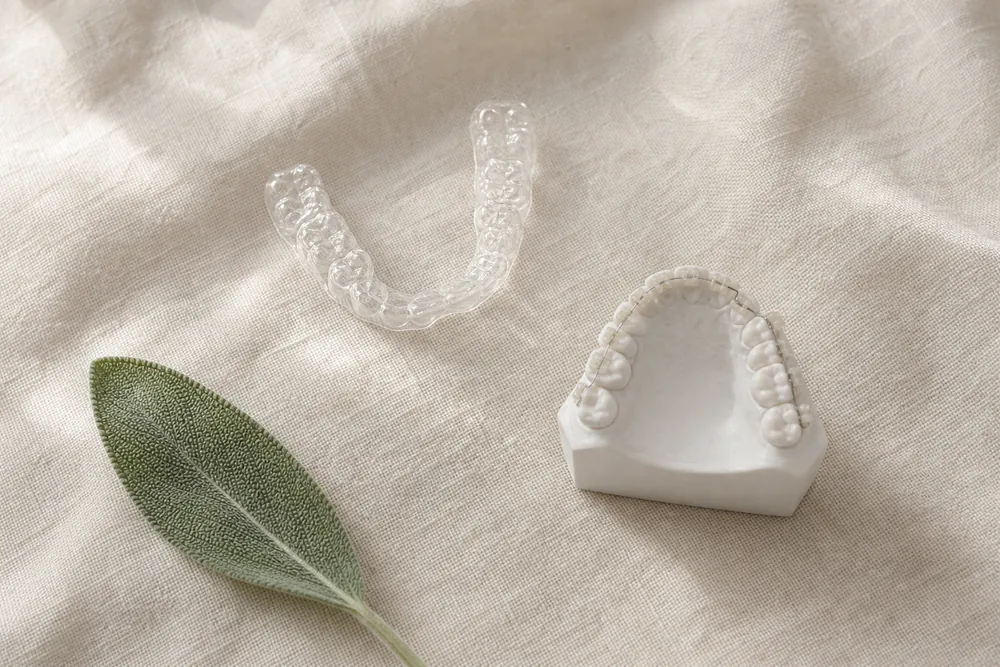
Both systems use gentle, constant pressure to move teeth slowly through the bone. Fixed braces do it with small brackets bonded to the teeth and a wire that the orthodontist adjusts every six to eight weeks. Invisalign uses a series of removable clear plastic trays, each one slightly different from the last. You switch to a new set every one to two weeks, and small tooth-coloured bumps called attachments help the aligners grip and turn the teeth.
The mechanics are different. Brackets give the orthodontist direct control over every tooth in three dimensions, which matters for large rotations, deep bites and moving teeth up or down. Aligners push rather than pull, and they work most predictably when every movement is planned carefully in the software and checked at each review appointment.
Which cases suit aligners, and which suit braces
In our experience, Invisalign works very well for:
- Mild to moderate crowding or spacing
- Teeth that have moved again after braces in the teenage years
- Many overbites and underbites, when combined with small elastics
- Adults who need straighter teeth before veneers, crowns or implants
Fixed braces are often the more predictable choice for severe crowding, teeth that need to move a long way, impacted teeth that have to be guided into the arch, and complex bites in growing children. Self-ligating systems such as Damon braces use a small sliding door instead of elastic ties, which reduces friction and can make adjustments a little more comfortable. Your orthodontist will confirm which option suits your bite after an examination.
Daily life: discipline versus convenience
The biggest difference is not plastic or metal. It is who is in charge. Aligners only work while you wear them, which means 20 to 22 hours a day. You take them out to eat and to drink anything except water, then brush before putting them back in. For busy professionals with long business lunches and evening events, this takes some planning, and lost or forgotten trays slow treatment down.
Braces work around the clock without any effort from you, but they come with rules of their own. Hard and sticky foods can break brackets, cleaning around the wire takes longer, and teeth feel sore for a few days after each adjustment. Aligners create pressure too, usually for a day or two with each new set, but there are no wires to rub against the cheeks.
Treatment time and results
For similar cases, treatment time is broadly the same. Simple aligner cases can finish in about six months, while most comprehensive cases with either system take 12 to 24 months. What matters more than the appliance is the quality of the plan and how closely you follow it.
Whichever you choose, you will need retainers afterwards. Teeth tend to drift back, especially in the first year. We usually fit a thin bonded wire behind the front teeth, a removable clear retainer for night-time wear, or both.
What it costs in Dubai
At Veloradent, metal or ceramic braces start from AED 8,500 for full treatment, Invisalign from AED 9,900 and Damon braces from AED 13,500. If you want braces that are completely hidden, lingual braces fitted on the inside of the teeth start from AED 22,000. The final fee depends on how complex your case is and how long treatment takes, and you receive a written quote after your consultation.
Most patients spread the cost. You can pay in 0% instalments over 3, 6 or 12 months on selected bank credit cards, or split payments with Tabby or Tamara. Orthodontic cover varies widely between insurance policies, so check yours before you start. Direct billing with major insurers is available at our Trade Centre clinic.
How to decide
Start with a proper orthodontic assessment rather than a choice of product. At your consultation we examine your bite, take photos, X-rays and digital impressions, and show you what each option can realistically achieve. Then ask yourself honestly whether you will wear aligners for 22 hours a day. If the answer is yes and your case suits them, Invisalign is a comfortable and discreet choice. If you would rather not think about it, braces may suit you better.
Dr. Elena Markovic focuses on Invisalign and clear aligners, while Dr. Omar Al Suwaidi treats patients with metal, ceramic, Damon and lingual braces. Because both work in the same team, you get an honest comparison rather than a sales pitch for one system.
This article is general information and does not replace an examination. Your dentist will confirm what suits you.