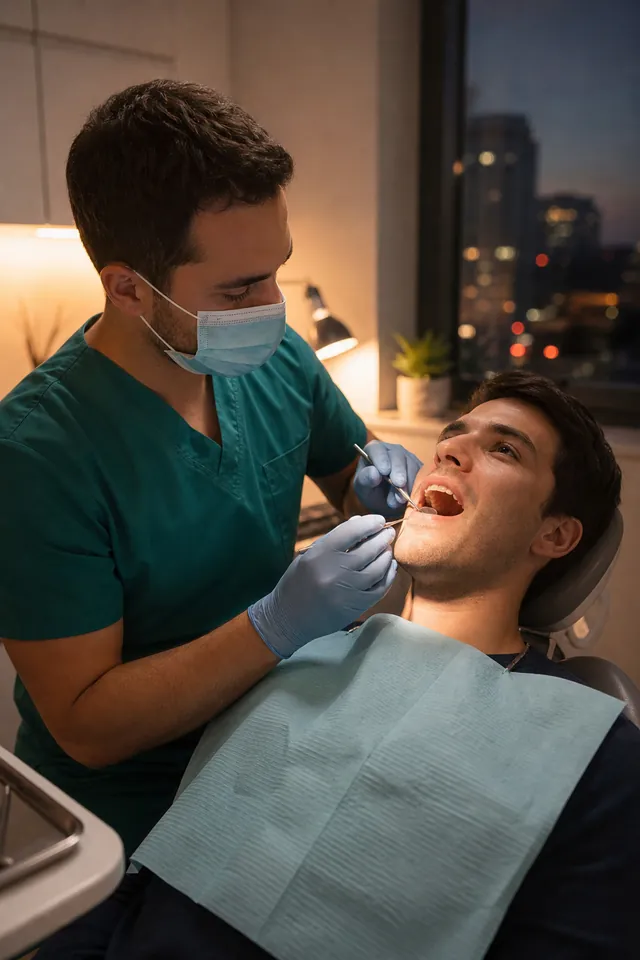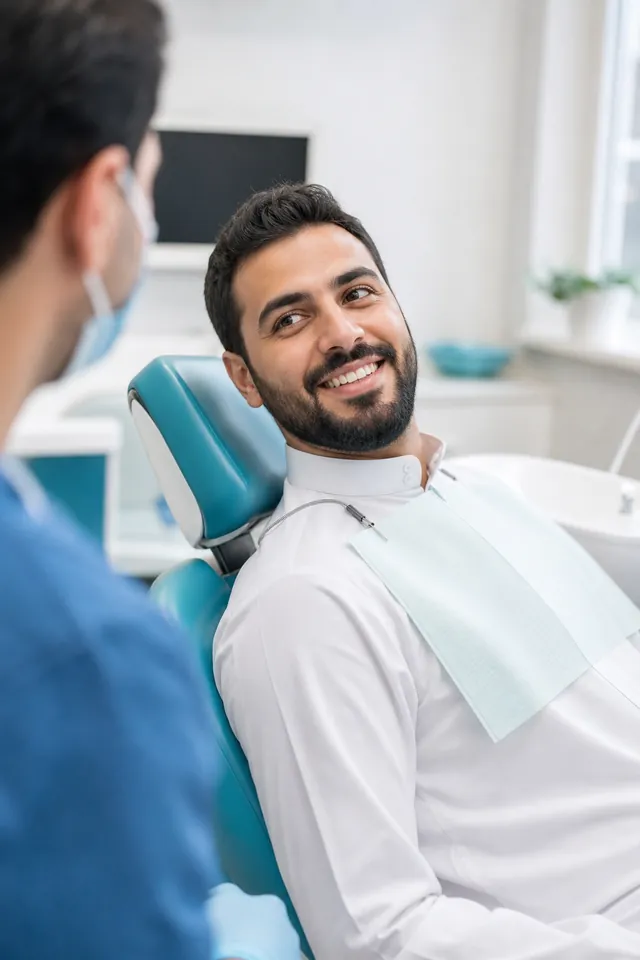
Inside every tooth is a soft core of nerves and blood vessels called the pulp. Deep decay, a crack or a knock can let bacteria reach it, and the pulp becomes inflamed or infected. Typical signs are an ache that lingers after hot or cold drinks, pain when you bite, a tooth that has turned darker, or a small pimple on the gum. Sometimes there are no symptoms at all and the problem shows up only on an X-ray. Left untreated, the infection can spread into the jawbone and form an abscess.
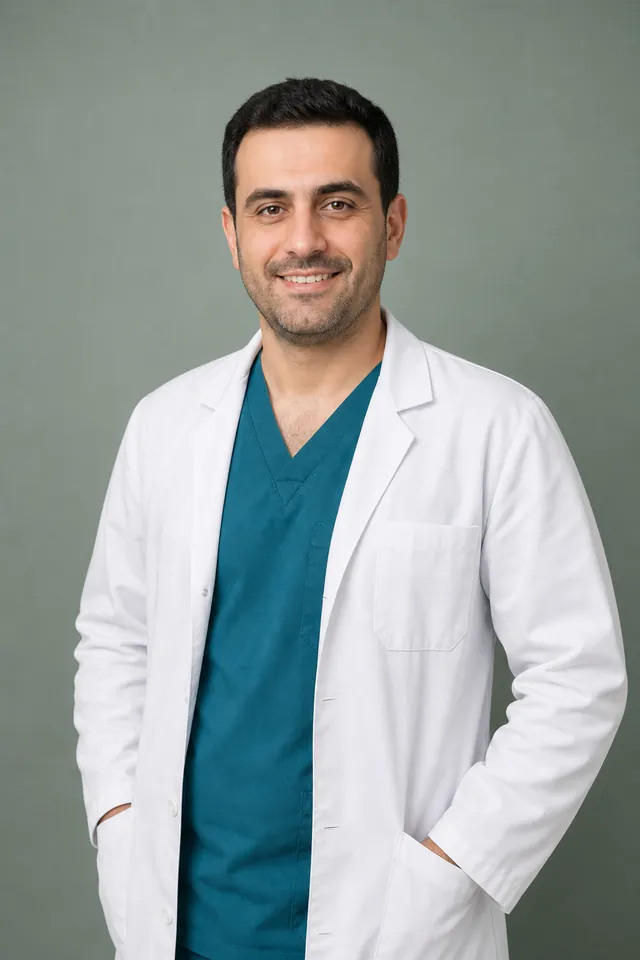
Root canal treatment at Veloradent is led by Dr. Rahul Menon, our specialist endodontist. He works under a dental operating microscope, which magnifies the tooth many times and helps him find narrow or extra canals that are easy to miss with the naked eye. Flexible nickel-titanium rotary files shape the canals smoothly before they are disinfected and sealed. With modern local anaesthetic, most patients say the treatment feels much like having a large filling. If you are anxious, ask about conscious sedation at our JLT clinic.
A tooth that has had a root canal is more brittle, especially a molar or premolar that takes heavy chewing forces. In most cases we recommend a crown on back teeth within a few weeks to protect the tooth from cracking. Front teeth can often be restored with a bonded filling instead. If an older root canal has failed, the tooth can usually be re-treated: the old filling material is removed, and the canals are cleaned again and re-sealed. Your dentist will confirm after an examination whether a tooth can be saved.
Benefits
Keeps your natural tooth
Saving the tooth avoids an extraction and the cost and time of replacing it with an implant or bridge. A well-restored root-filled tooth can usually last for many years.
Microscope precision
Magnification and bright light help Dr. Menon locate hidden canals, remove infected tissue thoroughly and spot fine cracks, which lowers the chance that the infection comes back.
Fewer, shorter visits
Rotary files shape canals faster and more evenly than hand instruments alone, so most treatments are finished in one or two appointments of 60 to 90 minutes each.
Relief from pain and swelling
Removing the inflamed or infected pulp usually ends a throbbing toothache. Mild tenderness when you bite is normal for a few days and settles with simple painkillers.
How treatment works
Examination and X-ray
We test the tooth with cold and gentle tapping, take an X-ray and explain whether the tooth can be saved, what it will need afterwards and what the treatment will cost.
Cleaning the canals
Under local anaesthetic, a thin rubber sheet isolates the tooth. Dr. Menon opens it, removes the pulp under the microscope and shapes the canals with rotary files while rinsing them with disinfectant.
Sealing the canals
The clean canals are filled with a rubber-like material and a sealer. If the infection was severe, a medicated dressing may stay inside for one to two weeks before this final seal.
Crown and follow-up
Back teeth usually need a crown to prevent cracks, often within two to four weeks. We then check healing with an X-ray, typically six to twelve months after treatment.
Is it right for you?
- Toothache that lingers after hot or cold drinks, or wakes you at night
- A tooth with deep decay, a large old filling or a crack reaching the nerve
- A gum boil or abscess next to a tooth, even if it does not hurt
- An older root canal that is painful or shows infection on a new X-ray
Your dentists for root canal treatment

Frequently asked questions
Does a root canal hurt?
The treatment is done under local anaesthetic, so most patients feel pressure and vibration rather than pain. The tooth and gum may feel tender for two to five days afterwards, especially when biting, and ibuprofen or paracetamol is usually enough. If the tooth is very infected before treatment, tell us, as it may need extra time to go numb.
How many visits will I need?
Many root canals are completed in one visit of 60 to 90 minutes. Molars with curved or extra canals, and teeth with an active abscess, often need two visits, with a medicated dressing in between to disinfect the canals. Re-treatment of an old root canal may also take two visits. Dr. Menon will explain the plan after looking at your X-ray.
How much does root canal treatment cost in Dubai?
Root canal treatment starts from AED 1,400 per tooth for front teeth. Premolars and molars cost more because they have more canals. A crown on a back tooth is a separate fee, from AED 1,600 for zirconia. You can pay in 0% instalments over 3, 6 or 12 months on selected bank credit cards, split the cost with Tabby or Tamara, or use direct insurance billing at our Trade Centre clinic.
Why do I need a crown after a root canal?
A root-filled tooth no longer has a blood supply and has often lost much of its structure to decay. Back teeth take strong chewing forces and can split, sometimes beyond repair. A crown holds the tooth together and protects it. Front teeth carry less load, so they can often be restored with a bonded filling instead.
Can an old root canal be treated again?
Yes, in many cases. If a root-filled tooth becomes painful or an X-ray shows infection, Dr. Menon removes the old filling material, looks for missed canals or cracks under the microscope, then cleans and re-seals the tooth. If it cannot be saved, we explain the alternatives, such as an implant. Bring your existing plan and recent X-rays for a free second opinion.