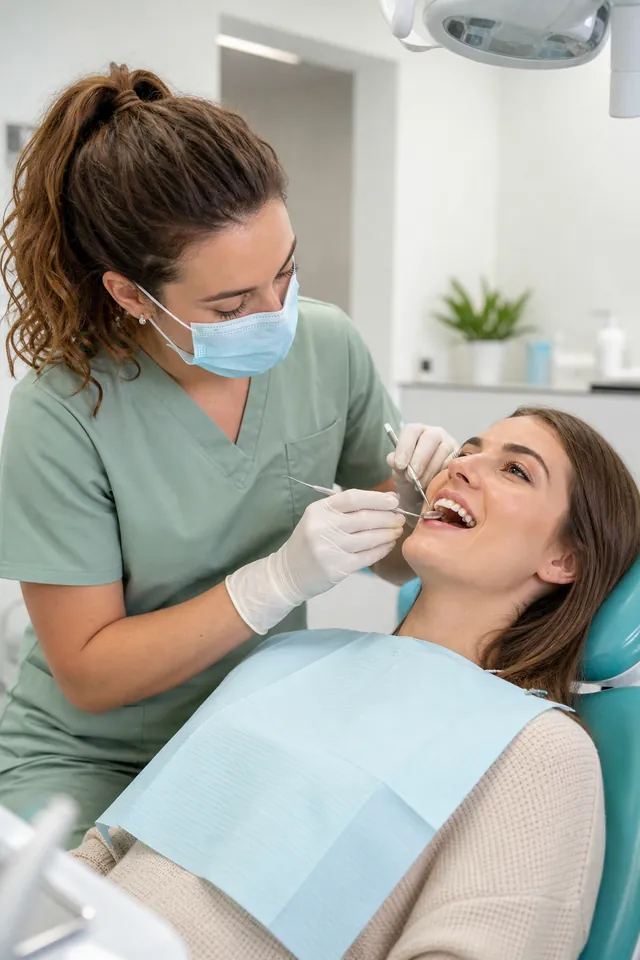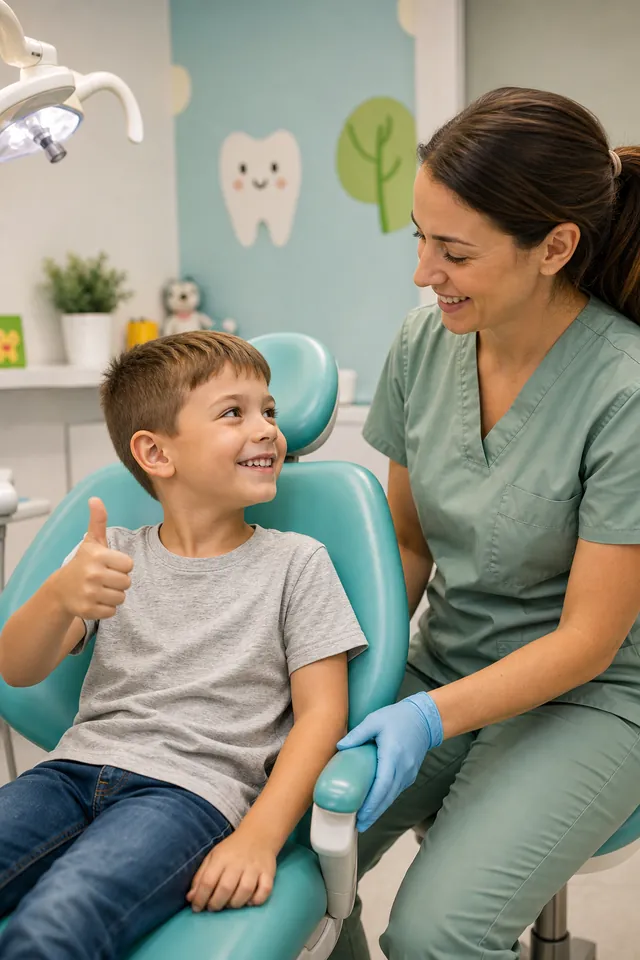
We recommend a first dental visit when the first tooth appears, or by your child's first birthday at the latest. It may sound early, but the visit is short and relaxed. Your child sits on your lap while we count the teeth, check the gums and bite, and look for early signs of decay. You get practical advice on brushing, how much fluoride toothpaste to use, night-time feeds and bottles, juice, snacks and thumb-sucking. Early visits also mean the dental chair feels familiar long before your child ever needs a filling.
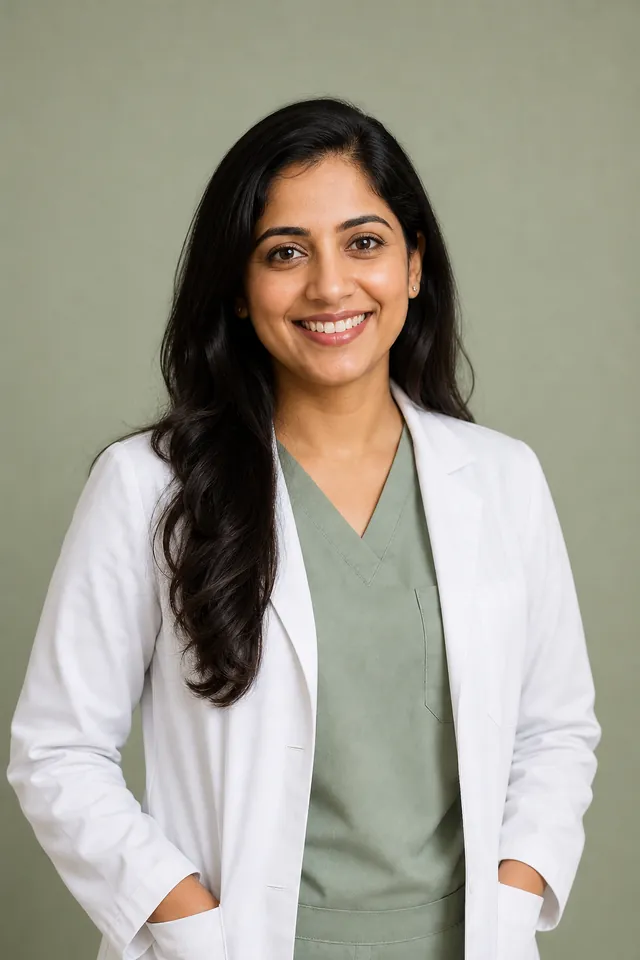
Children are seen by Dr. Anika Shah, our specialist pediatric dentist, at our Trade Centre clinic. She uses the tell-show-do approach. First she tells your child what will happen in simple words, then shows the instrument, for example by counting fingers with the little mirror or letting the water spray tickle a hand, and only then uses it in the mouth. Parents are welcome to stay in the room at every visit. We keep appointments short, explain things honestly and stop for a break whenever a child needs one.
Prevention is the heart of pediatric dentistry. A thin coat of fluoride varnish, painted on in seconds, strengthens enamel and helps stop early decay. Fissure sealants are a protective coating flowed into the deep grooves of the permanent back molars, usually soon after they come through at around six and twelve years old. When treatment is needed, we use child-friendly fillings and crowns for baby teeth and look after chipped or knocked teeth after sports accidents. We also watch how the jaws grow and refer for orthodontic advice at the right age.
Benefits
A specialist for children
Dr. Shah has specialist training in children's dentistry, from toddlers to teenagers, including children who feel anxious or have had a difficult dental experience before.
Parents in the room
You can sit next to your child or hold them on your lap. A calm parent nearby helps young children feel safe, and you hear our advice first-hand.
Prevention before fillings
Fluoride varnish and fissure sealants are quick, comfortable and need no injections. They lower the risk of decay at the ages when children are most prone to it.
Habits that last
We show children and parents how to brush properly, which toothpaste suits each age and which snacks and drinks are kinder to teeth, so good routines start at home.
How treatment works
First visit
A short, relaxed visit when the first tooth appears or by age one. We check teeth, gums and bite, answer your questions and let your child explore the chair at their own pace.
Check-up and clean
Every six months we examine the teeth, polish away plaque and take small X-rays when needed. Fluoride varnish is applied according to your child's risk of decay.
Sealants and treatment
Fissure sealants protect new permanent molars. If a tooth needs a filling, we explain it with tell-show-do, give local anaesthetic gently and keep the appointment as short as possible.
Growing up
We monitor how the teeth and jaws develop, advise on sports mouthguards and refer for an orthodontic check, usually around age seven, if we see crowding or a bite problem.
Is it right for you?
- Babies with a first tooth and toddlers ready for their first dental visit
- Children due for a six-monthly check-up, clean and fluoride varnish
- Children aged six to twelve whose new permanent molars need fissure sealants
- Anxious children, or those who had a difficult dental visit in the past
Your dentists for pediatric dentistry
Frequently asked questions
When should my child first see a dentist?
When the first tooth appears, or by the first birthday at the latest. Decay in baby teeth can develop quickly, especially with night-time feeds or frequent juice, and it is much easier to prevent than to treat. The first visit is short and mostly about advice for parents. It also helps your child get used to the clinic before anything needs to be done.
What are fissure sealants and does my child need them?
Fissure sealants are a thin, tooth-coloured coating flowed into the deep grooves of the back teeth, where food and bacteria collect and toothbrush bristles struggle to reach. They need no drilling or injections and take a few minutes per tooth. They are most useful on the permanent molars soon after they come through, usually around six and twelve years old.
How much does a children's check-up cost?
A children's check-up and clean starts from AED 250. Fluoride varnish, X-rays, sealants and any fillings are priced separately and always explained before we start. Many insurance policies cover preventive care for children, and direct billing with major insurers is available at our Trade Centre clinic. You can also pay with Tabby or Tamara, or in 0% instalments on selected bank credit cards.
Can I stay with my child during treatment?
Yes. Parents are welcome in the room at every visit, and young children often sit on a parent's lap for their first check-ups. During treatment we may ask you to stay quiet and let Dr. Shah do the talking, so your child can focus on one calm voice. We will always explain what we are doing and why.
Do baby teeth need fillings if they will fall out anyway?
Often, yes. Some back baby teeth stay in place until around age eleven or twelve. They hold space for the adult teeth and help with chewing and speech, and a decayed baby tooth can become painful or infected. Very small early lesions can sometimes be managed with fluoride and monitoring. Dr. Shah will explain the options after examining your child.